

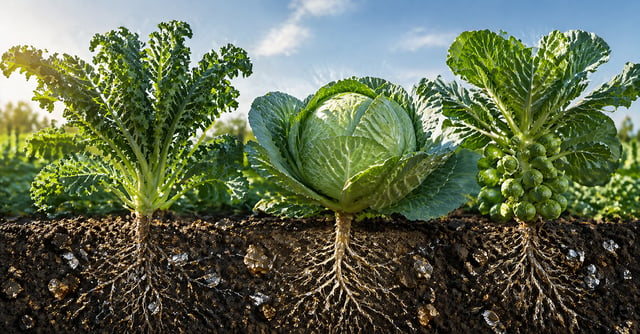
Kale, cabbage and Brussels sprouts planted on contaminated soil. Not for food, but to extract toxic metals from the ground.
Recent research from the The University of Queensland points to the potential of Brassicaceae crops such as kale, broccoli, cabbage and Brussels sprouts to take up thallium from polluted soil. That is notable because thallium is highly toxic, but also used in areas such as medical technology, semiconductors and optical glass.
The broader idea of phytomining is not new. Patents have already been filed on using plants to extract metals from soil, on improving uptake through soil treatment, and on recovering metals from harvested biomass.
It becomes interesting when you look at the details: which plant is suited to which metal, under what conditions uptake works at scale, how recovery takes place downstream, and whether the full process can be made technically robust and commercially relevant.