

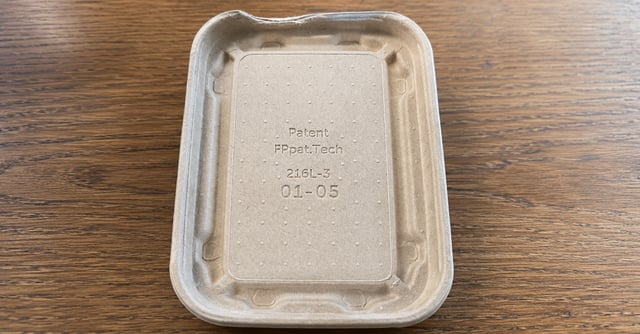
A paper butter tub that can handle oil, moisture and refrigeration. I noticed it almost by accident while making a sandwich. It sounds so simple. But it is not.
Paper packaging is easy to like from a sustainability perspective. But for products like butter and spreads, the technical challenge is much harder.
Especially when you don’t want to be relying on the plastic layers that often make paper-based packaging difficult to recycle.
That is why I find Blue Band’s paper tub interesting.
It was developed by Upfield, now Flora Food Group, together with Footprint. The result is a plastic-free, oil-resistant and recyclable paper tub for plant-based spreads.
The visible product is just a tub.
But the real innovation sits in the details: fiber structure, surface treatment, barrier performance and manufacturing at scale.
Those details determine whether a sustainable packaging idea remains a nice concept, or becomes something that can survive the supermarket shelf, the refrigerator and everyday use.
This is also where IP becomes relevant.
Not because “paper packaging” itself is new.
But because the specific combination of materials, processing steps and barrier properties can be what makes the difference.
In cleantech, progress often looks like this.
Not one revolutionary breakthrough.
But many smart technical choices that make a better alternative practical, scalable and commercially viable.